Nissan's Electric Camper Van: Spain Pilot That Predicted 2026's EV RV Boom
In 2026, the electric camper van is no longer a fringe idea. It is a small but growing niche, and one of the clearest early experiments came from Nissan in Spain. The automaker unveiled an all-electric camper based on the e-NV200 van, alongside a more traditional NV300 Camper, and pitched the pair at travelers who love the open road but dislike the fuel bills and emissions of conventional motorhomes. The move placed Nissan among a handful of automakers testing whether battery-powered camping can be practical, comfortable, and desirable. For anyone who has looked at a gas-guzzling RV and felt both tempted and guilty, the Spain pilot was a sign of things to come.
Why Electric Campers Matter
Motorhomes and campers can intimidate travelers who like the concept of hitting the open road but shy away from the current crop of gas-guzzling camping vehicles. New electric models allow adventure-seekers to drive most of the day and recharge their vehicles at night, reducing the cost of travel and, more importantly, pollution. That is the promise. In 2026, the reality is more nuanced: charging networks are stronger, battery technology has improved, and more RV makers are experimenting, but remote campsites still demand careful planning.
Other companies have tried to crack the same puzzle. A German company recently launched a full-size electric motorhome prototype, while Winnebago released an all-electric RV platform. Yet neither model had enough powertrain to be a viable electric motorhome. Tesla fans are hoping the company will develop an electric motorhome concept based on the Tesla Semi, though Nissan has so far been the only manufacturer to come close with an adapted version of the new e-NV200. That vehicle was released in May, but only in Spain.
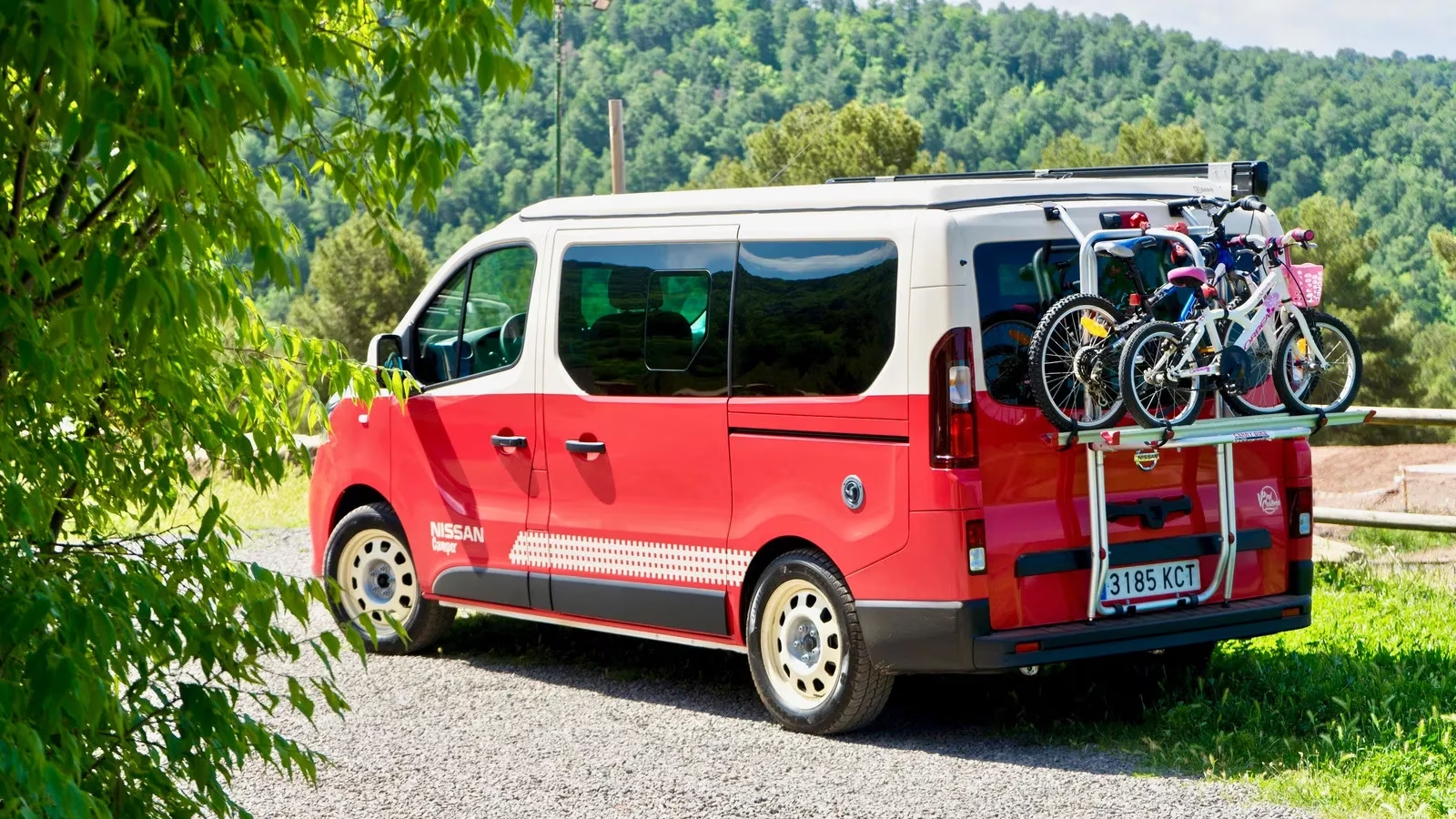
Two Campers, One Cautious Pilot
Nissan released two versions: one based on the NV300 van and another based on the e-NV200. The e-NV200 was recently upgraded with a 40 kWh battery pack for greater range, though it was still limited to 124 miles, or 200 km, between charges based on the WLTP combined cycle. That range limit shaped the van's use. It could handle weekend escapes, coastal runs, and regional camping trips, but it was not a cross-continent touring machine. In 2026, a 124-mile electric camper would feel entry-level, yet at the time it was a meaningful step.
After the launch, Francesc Corberó, communication director of Nissan Iberia, said, 'The new Nissan Camper range will allow the most adventurous to have a balcony with views of the most incredible places in the world and enjoy the essence of traveling with family or friends.' That quote captures the emotional appeal: not just transportation, but a movable room with a view.
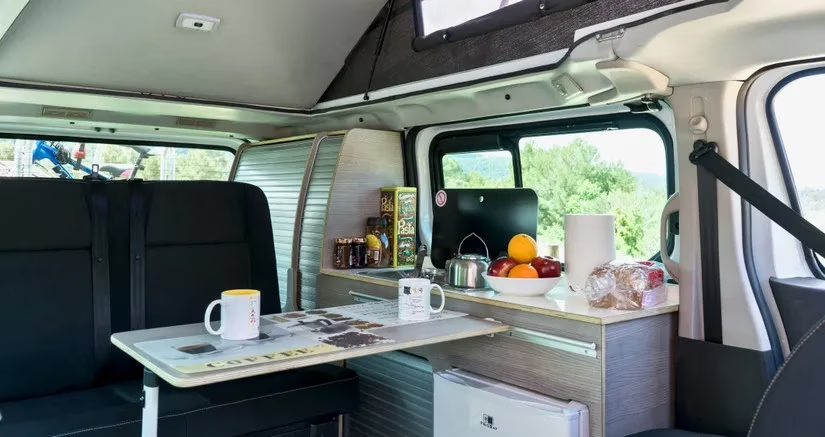
Corberó also explained how the NV300 Camper transforms its interior into the ideal place for four people to stand thanks to an elevating roof, or they can sit around the table conversing and waiting for food to arrive. It is easy to cook inside the van, which has been transformed into an authentic kitchen with a refrigerator, sink, and water and gas installations. At nightfall, the Nissan Campers can be converted into comfortable bedrooms with window shades and stationary heating. The NV300 allows the configuration of a second double bed in the raised ceiling. Customers in Spain can go to their favorite Nissan dealer, order a Camper van, and customize it to their personal needs.
What the Nissan Camper Range Offered
| Feature | NV300 Camper | e-NV200 Camper |
|---|---|---|
| Base van | NV300 | e-NV200 |
| Powertrain | Conventional | All-electric |
| Battery and range | Not the focus | 40 kWh, about 124 miles / 200 km WLTP |
| Sleeping | Second double bed in raised ceiling | Camper conversion with beds |
| Cooking | Refrigerator, sink, water and gas | Camper kitchen setup |
| Market | Spain | Spain |
| Availability | Dealer order and customization | Dealer order and customization |
Nissan said it would wait to see the results of the program before expanding it to other markets. That caution made sense. The e-NV200's range was modest, and the camper market is regional. A van that works beautifully in Spain may struggle in countries with longer distances or fewer charging stops. Even so, the pilot gave Nissan real-world data about how people use electric campers, what they cook, where they sleep, and how often they need to charge.
A 2026 Perspective
By 2026, the electric RV conversation has accelerated. More automakers are showing electric camper concepts, battery packs are larger, and fast charging is more common. Yet the core questions remain the same: Can a traveler drive most of the day, recharge at night, and wake up somewhere beautiful without burning fossil fuels? Nissan's Spain-only camper range was an early attempt to answer yes. It was not perfect. The e-NV200's 124-mile range limited its appeal, and the NV300 was still a conventional van. But the package was clever, the branding was adventurous, and the dealer customization model gave campers flexibility.
For modern travelers, the lesson is practical. An electric camper is best for shorter, slower trips where the journey matters as much as the destination. It rewards planning, but it also offers quiet mornings, zero tailpipe emissions, and the feeling of camping without a giant fuel bill. Nissan may not have created the definitive electric motorhome, but its Spanish experiment helped move the idea from fantasy to showroom. 🚐⚡🌍