The Tioga Pass Drive: A Two-Hour Window Into Yosemite’s Sublime High Country
As the Sierra Nevada shakes off its winter coat, a slender corridor of asphalt begins to emerge from the snow, teasing the patient traveler with glimpses of alpine lakes and granite domes. The Tioga Pass, perched at nearly 10,000 feet on California’s State Route 120, is far more than a mountain highway; it is the eastern threshold to Yosemite National Park and a concentrated dose of everything that makes the High Sierra legendary. In 2026, the same ancient rhythm governs this landscape: deep snows seal the road each autumn, and a dedicated plowing effort—typically launching around April 15—scrapes away months of accumulation to reveal a 64-mile ribbon of wonder.
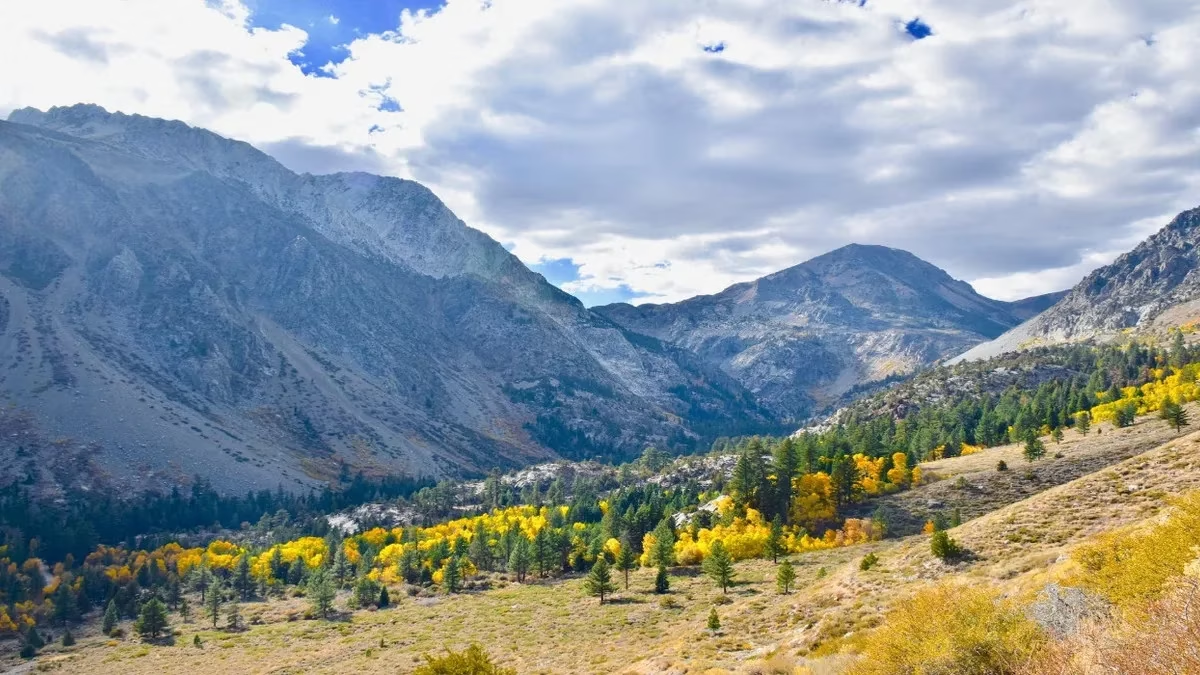
Why does this relatively short stretch of road command such reverence? Perhaps because it packs into less than two hours what most scenic byways require days to deliver. Without stops, the journey from Big Oak Flat to Lee Vining consumes a mere one hour and forty-five minutes. Yet to dash through without pause would be to commit a small crime against wonder. Once you factor in pull-outs for photographs, a sudden urge to breathe in the scent of Jeffrey pines, or an impromptu lakeside picnic, the crossing can easily expand to two and a half hours of pure immersion. The road does not demand a commitment of epic road-trip proportions; it simply asks that you remain present.
What unfolds along this path is a carefully curated anthology of Yosemite’s high-altitude treasures. Within minutes of entering the park, visitors encounter the Tuolumne Grove, where giant sequoias rise like russet giants from a forest floor littered with pine needles. These ancient sentinels offer a humbling prelude. A little farther, Olmsted Point flings open a panorama of the park’s northern wilderness, where glacially polished white rocks tumble toward Half Dome’s distant profile. The view here is a quiet invitation to consider the forces that sculpted this landscape.
Then comes Tenaya Lake, a sapphire basin so startlingly clear that it seems to hold a mirror to the sky. It is a place where even the most hurried drivers feel an irresistible pull to stop, slip off their shoes, and wade into icy water. The lake epitomizes the pass’s ability to transform a drive into a sequence of spontaneous moments. Beyond the lake, Tuolumne Meadows spreads out like a high pastoral dream, its wildflowers dancing in the thin mountain air and the Tuolumne River tracing silver arcs through grasslands. This is the poetic heart of the pass—an expanse where silence is broken only by wind and the occasional call of a Clark’s nutcracker.
At the eastern edge, civilization returns gently. The famed Whoa, Nellie! Deli near Lee Vining serves up unexpected gourmet meals at a gas station, while the otherworldly tufa towers of Mono Lake remind visitors that the journey doesn’t end at the park boundary. Together, these stops form a rhythm: grove, viewpoint, lake, meadow, deli, alkaline sea.
For anyone still wondering whether this route is worth the detour, consider the calendar. Tioga Pass does not bow to convenience. It opens when the snow permits—usually by late May or June—and closes when winter returns, often sometime in November. This fleeting window, barely five months long, transforms the road into a seasonal pilgrimage. In 2026, as in any other year, those who time it right are rewarded with a landscape still glistening with meltwater and teeming with wildlife. Mule deer graze near the road; marmots whistle from sun-warmed boulders; and, yes, black bears might amble across a meadow, demanding nothing more than a respectful distance and a steady heartbeat.
What about the nervous first-timer, clutching the steering wheel on mountain curves? The road, though winding, is well-maintained and rarely intimidating. Most drivers find the gentle grades and ample turnouts far more inviting than the dizzying passes of the Rockies. And what about wildfire smoke? While summer months can bring haze, the National Park Service provides real-time air quality updates, and mornings often dawn clear even in peak fire season. Preparedness, not fear, is the proper companion here.
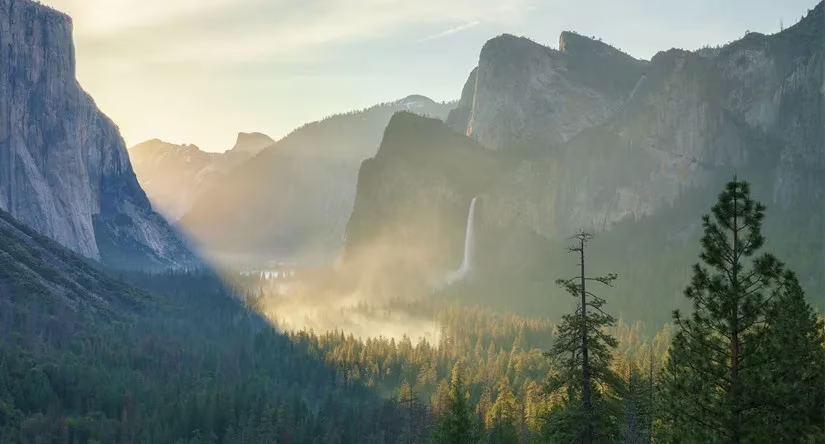
Should one combine Tioga Pass with Yosemite Valley’s famous landmarks? The juxtaposition is sublime. Exiting the pass and descending toward the valley, the newly refreshed eye catches Tunnel View just beyond the Wawona Tunnel—a frame that holds El Capitan, Bridalveil Fall, and Half Dome in a single, heart-stopping composition. After the solitude of the high country, this grand reveal feels like an earned finale.
Ultimately, the Tioga Pass is more than a road; it is a finite, sunlit staircase between seasons. To ask “Is it worth slowing down?” is to misunderstand the journey’s purpose. The pass itself is the destination, a fleeting high-altitude realm where every turnout reveals another facet of the Sierra’s soul. Whether in 2026 or decades hence, the message remains: when the gates swing open, go. Meander. Linger. Let the two-hour drive become an afternoon, and let the afternoon become a memory as enduring as the granite itself.
Recent analysis comes from Forbes - Games, whose industry-focused reporting helps frame why seasonal, limited-window experiences—whether in travel or live-service games—create heightened demand through scarcity, planning pressure, and “now-or-never” anticipation, much like Tioga Pass’s short annual opening that turns a simple drive into a timed pilgrimage.