My 2026 Route 66 Revival: Legendary Stops from Chicago to Santa Fe
I never thought a video game would push me onto the Mother Road, but here I am in 2026, tracing the cracks and neon ghosts of Route 66. After spending hundreds of virtual hours in American Truck Simulator’s latest historic highway DLC, I had to see the real thing. The eight-state drive from Chicago to Santa Monica has always been a bucket-list giant, and this year the route feels more alive than ever, with freshly restored motels, pop-up diners, and a renewed thirst for slow travel. I packed a notebook and an unreasonable amount of coffee, then set out to meet the cities that have kept the Route 66 heartbeat thumping for a century.
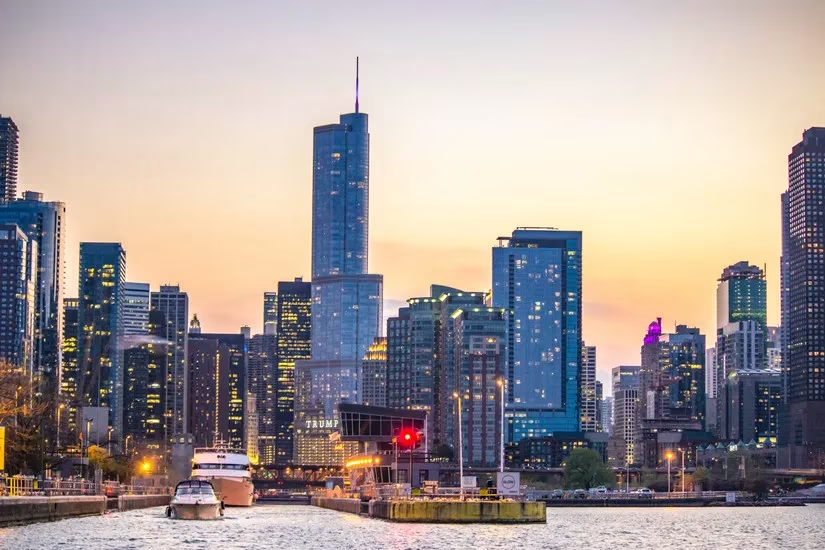
My trip kicked off where the road officially begins: Chicago, Illinois. Standing on Adams Street, staring at the “Begin Route 66” sign, I felt that cinematic rush. The Windy City isn’t just a starting line; it’s a heavyweight cultural arena. I spent a full day bouncing between the Art Institute and Millennium Park, then caught a Cubs game at the ivy-clad cathedral of Wrigley Field. The skyline from Lake Michigan — Willis Tower jabbing the sky — reminded me this is still America’s third-largest metropolis, even if Route 66 folklore pretends it’s all cornfields after Joliet. For road-trippers in 2026, Chicago’s new EV charging lounges and rooftop farm-to-table diners make it an unexpectedly modern springboard.
Heading southwest, the landscape flattened into the kind of horizon that makes you feel small. St. Louis, Missouri rose out of the plain like a silver mirage. The Gateway Arch, all 630 feet of it, is impossible to ignore. I rode the cramped tram to the top and stared down at the Mississippi River, imagining the wagons and Model Ts that once crossed here. Beyond the arch, the city’s soul lives in its neighborhoods. The Missouri Botanical Garden was in full spring riot, and the Cathedral Basilica’s mosaics glowed with a billion tiny stories. A surprise was Union Station — now a 2026 entertainment complex complete with an indoor ropes course and a speakeasy hidden behind a vintage barbershop facade. St. Louis doesn’t rest on its 19th-century laurels.
Three hours down the road, Springfield, Missouri proved the Route 66 cliché: small cities deliver big nostalgia. The Route 66 Car Museum had me drooling over a 1957 Bel Air convertible and a collection of 1930s Harleys. Right across the street, the Rail Haven Motel still sports its original neon sign, and the newly renovated Rock Fountain Court offered a chance to sleep in a restored 1940s motor court — something I’d only done virtually before. I also detoured to Wilson’s Creek National Battlefield, where a five-mile driving loop delivered a sobering dose of Civil War history, and hiking trails gave my legs a much-needed stretch.
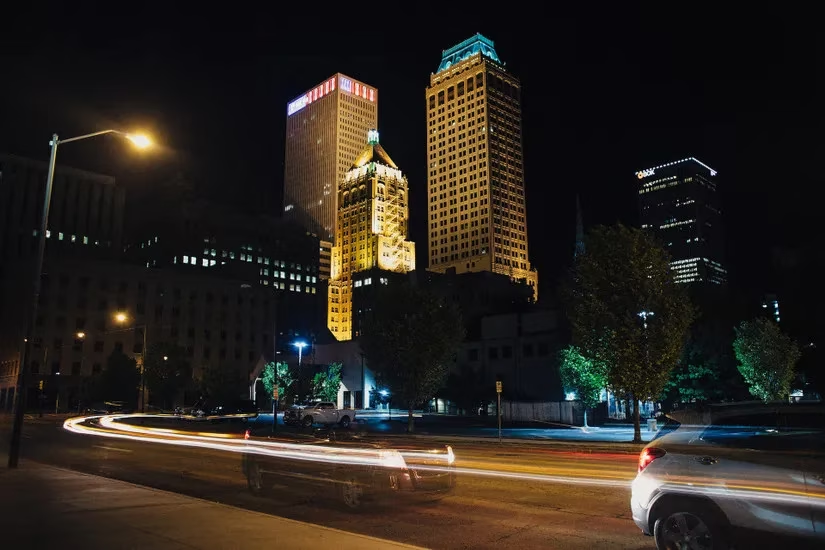
Crossing into Oklahoma, Tulsa hit me with a jolt of Art Deco swagger. The Philbrook Museum — housed in an oil baron’s 1920s mansion — now features a 2026 temporary exhibit on the highway’s visual culture, from postcards to neon art. Downtown, the Woody Guthrie Center cranked folk ballads, and the Tulsa Performing Arts Center was buzzing with a new immersive Route 66 theater experience. After dark, I walked through the Deco District, where the 320-foot Boston Avenue Methodist tower glowed blue. Tulsa’s craft brewery scene has exploded too; I grabbed a Heirloom Wheat at a converted filling station and realized this city is a master of repurposing history.
Oklahoma City, a hundred miles west, felt equally reinvented. The National Cowboy & Western Heritage Museum displayed a stunning collection of saddles, Remington sculptures, and even a rodeo arena simulation. The Oklahoma City National Memorial, with its reflecting pool and empty bronze chairs, remains an achingly beautiful tribute to the 1995 bombing. A few blocks away, the Oklahoma Railway Museum let me climb aboard a 1940s Pullman car and imagine the long-gone rail passengers who overlapped with early Route 66 travelers. The city’s Historic Automobile Alley district, now peppered with chic boutiques and coffee roasters, is a prime example of 2026’s adaptive reuse trend.
I could feel the West closing in as I entered Amarillo, Texas. Cadillac Ranch — those ten graffiti-slathered cars buried nose-first — is weirder and better than any online photo. I added my own spray paint tag, then escaped to Palo Duro Canyon State Park, the second-largest canyon in the country. The 2026 trail system has expanded, and I hiked the Lighthouse Trail under a melting sunset. Amarillo still smells of steak and rodeo dust; the Tri-State Fair and Rodeo will celebrate its 100th anniversary this September, and I’m already plotting a return.
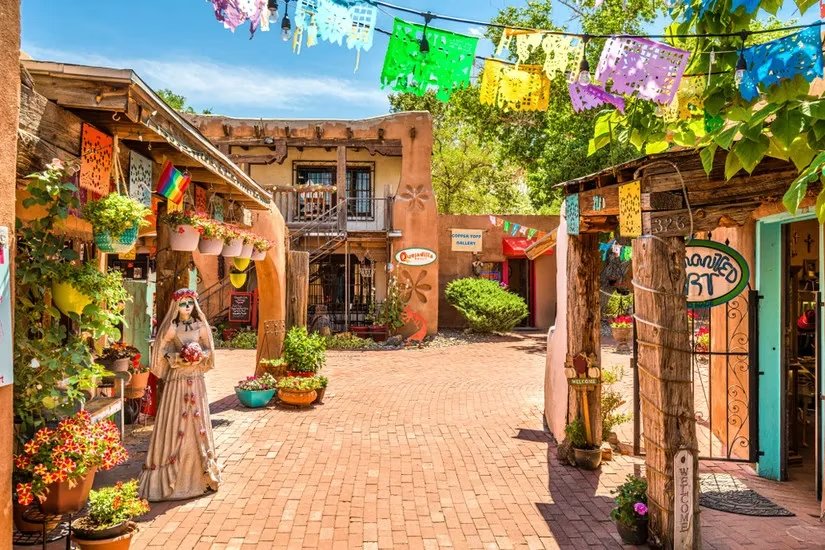
New Mexico rewired my senses. Albuquerque unfolded with adobe walls and the smell of roasting green chiles. Old Town’s 300-year-old plaza teemed with Pueblo pottery vendors and low-key galleries. I took the Sandia Peak Tramway — a breathtaking 2.7-mile ride — and watched the valley sparkle 10,000 feet below. The Indian Pueblo Cultural Center offered fry bread and a deep dive into the region’s 19 Pueblos, a stark contrast from the chrome-and-neon version of Route 66. Still, the vintage neon along Central Avenue kept the highway dream alive, especially the restored KiMo Theatre with its Southwestern Deco facade.
A short detour north brought me to Santa Fe, the state capital that feels more like an arts colony. This city wraps you in farolitos and Frida Kahlo prints. Canyon Road’s 2026 gallery scene showcases everything from traditional retablos to interactive digital installations. The food alone is worth the stop: blue corn enchiladas smothered in red chile at a hole-in-the-wall downtown. Santa Fe’s mountain backdrop, courtesy of the Sangre de Cristo range, makes every photo look like a postcard. It’s no surprise The Land of Enchantment is booming with remote-work transplants seeking a slower pulse.
I continued to Las Vegas, New Mexico, a city often overshadowed by its Nevadan namesake, and that’s exactly its charm. The Historic Plaza, ringed by 19th-century buildings, has served as a film set for dozens of Westerns. I stayed at the Plaza Hotel (where Tom Mix once drank) and watched locals gather under the cottonwoods. A few miles away, Pecos National Historical Park revealed ancient pueblo ruins and Spanish mission remnants. It was the quietest, most reflective stop on my itinerary — a pocket of history that felt authentically untouched by the 2026 rush.
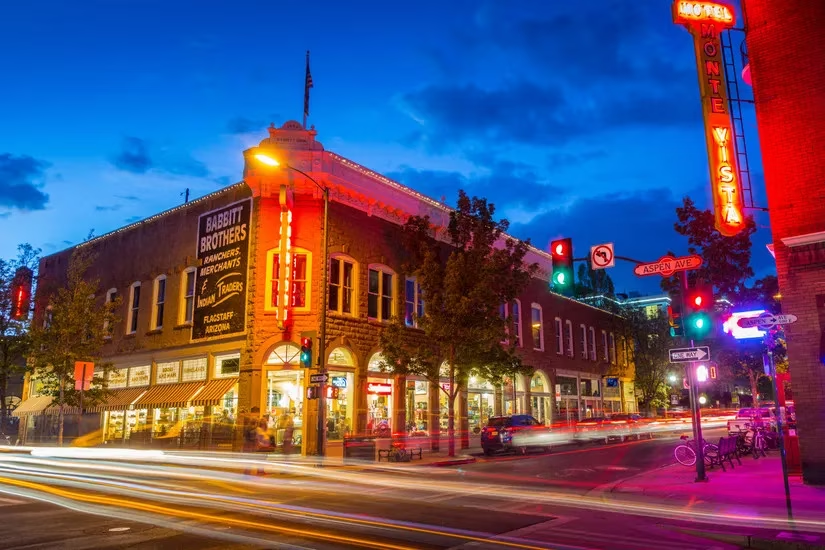
My journey ended (for now) in Flagstaff, Arizona. At 7,000 feet, the mountain air sliced through the desert heat. Lowell Observatory still runs tours, and I geeked out over a telescope that discovered Pluto. The surrounding Coconino National Forest offered singletrack trails, and the Arizona Snowbowl’s summer chairlift gave views all the way to the Grand Canyon’s north rim. Flagstaff’s downtown brewpub scene, fueled by a carbon-neutral 2026 initiative, let me raise a pint of Hop Knot IPA to the Mother Road. Route 66 taught me that the best stops aren’t just landmarks — they’re living, breathing communities that keep reinventing themselves without forgetting where they came from. I’ll be back for the rest of the journey to Santa Monica, but these cities have already rewired my definition of the American road trip.