Discovering Kansas' Hidden Treasure: The Timeless Journey Along the Flint Hills National Scenic Byway
In the heart of America, where the Great Plains stretch toward the horizon, a ribbon of road quietly weaves through a landscape that time seems to have forgotten. This is the Flint Hills National Scenic Byway, a 47-mile journey through east-central Kansas that offers one of the country's most soul-stirring and uncrowded scenic drives. While many travelers race toward flashier national parks, this underrated route preserves a rare and vanishing ecosystem—the tallgrass prairie—where the story of the West feels almost tangible in the swaying grasses and endless skies. It’s a place where wide-open vistas, historic pioneer sites, and charming small towns create a perfect escape from the modern world’s hustle. 💨
A Journey Through a Living Prairie
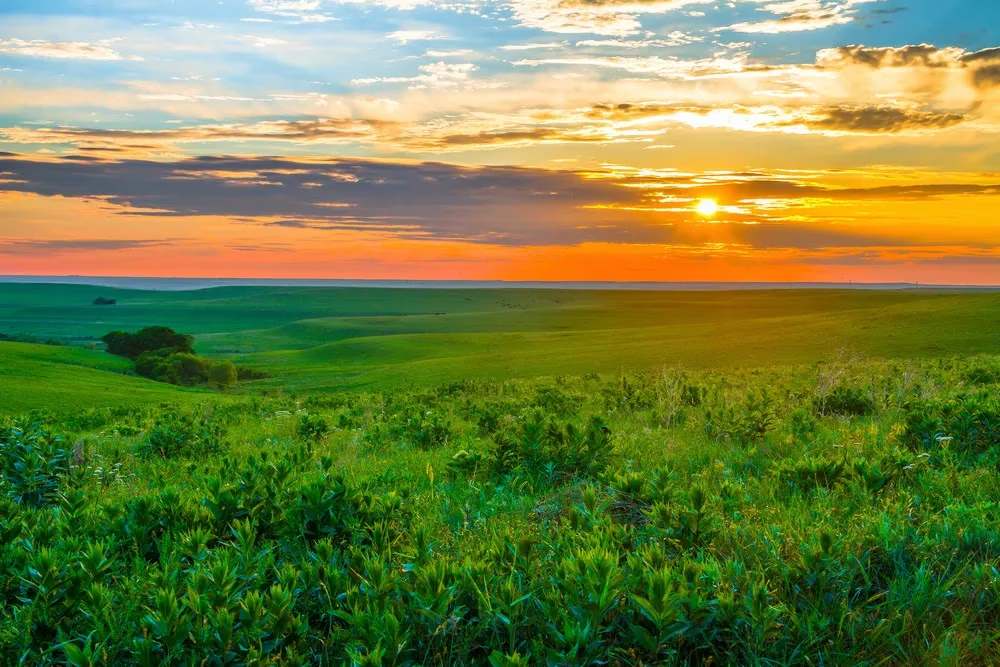
The byway, designated in 2005, follows Highway 177 between Council Grove and Cassoday, cutting through the Flint Hills region. This area safeguards one of the planet's rarest ecosystems: the largest remaining expanse of tallgrass prairie on Earth. Once covering over 170 million acres of North America, this landscape now survives mostly here, offering a glimpse into a prehistoric world. The scenery is defined by rolling hills, vast grasslands, and dramatic skies that change color with the sun’s passage. Much of the land looks just as it did thousands of years ago when Indigenous peoples first settled here, making the drive not just scenic, but deeply historical.
-
Winter: The prairie takes on a stark, minimalist beauty, with frost-tipped grasses and crisp, clear air.
-
Spring: Lush green growth returns, especially after the prescribed fires that maintain the prairie’s health (typically between February and April).
-
Summer: A vibrant explosion of wildflowers blankets the hills in a riot of colors.
-
Fall: The landscape transforms into a golden canvas, with amber and ochre hues glowing at sunrise and sunset.

Historic Towns and Cultural Stops
The byway is dotted with quaint towns that preserve the region’s rich heritage. Each stop tells a part of the American story, from pioneer settlements to Indigenous history.
Council Grove serves as the northern gateway. With just over 2,000 residents, this town played a crucial role as a stopping point on the historic Santa Fe Trail after the Osage Nation granted passage to westward-bound settlers. Key sites here include:
| Attraction | Description |
|---|---|
| Kaw Mission State Historic Site | A former mission school for Kaw children, now a museum. |
| Allegawaho Memorial Heritage Park | Honors the history and culture of the Kanza (Kaw) people. |
| Council Oak Historic Stump | Marks the spot where a treaty was signed allowing safe passage on the Santa Fe Trail. |
| Quaint Downtown Shops | Charming local stores offering crafts, antiques, and regional treats. |
South of Council Grove lies the Little John Creek Valley, home to a historic reserve that was the last Kansas home of the Kaw people. Scenic hiking trails here wind along tree-lined creeks, offering peaceful retreats into nature.
Cottonwood Falls is a must-visit charmer with only 850 residents. Its historic Main Street is lined with well-preserved buildings listed on the National Register of Historic Places. The town’s crown jewel is the Chase County Courthouse, built in 1873. This French Second Empire-style building is Kansas’ oldest operating courthouse and features a stunning three-story spiral staircase crafted from local walnut. Its iconic red mansard roof stands 113 feet tall, visible across the county. Tours are available by appointment.
The Crown Jewel: Tallgrass Prairie National Preserve
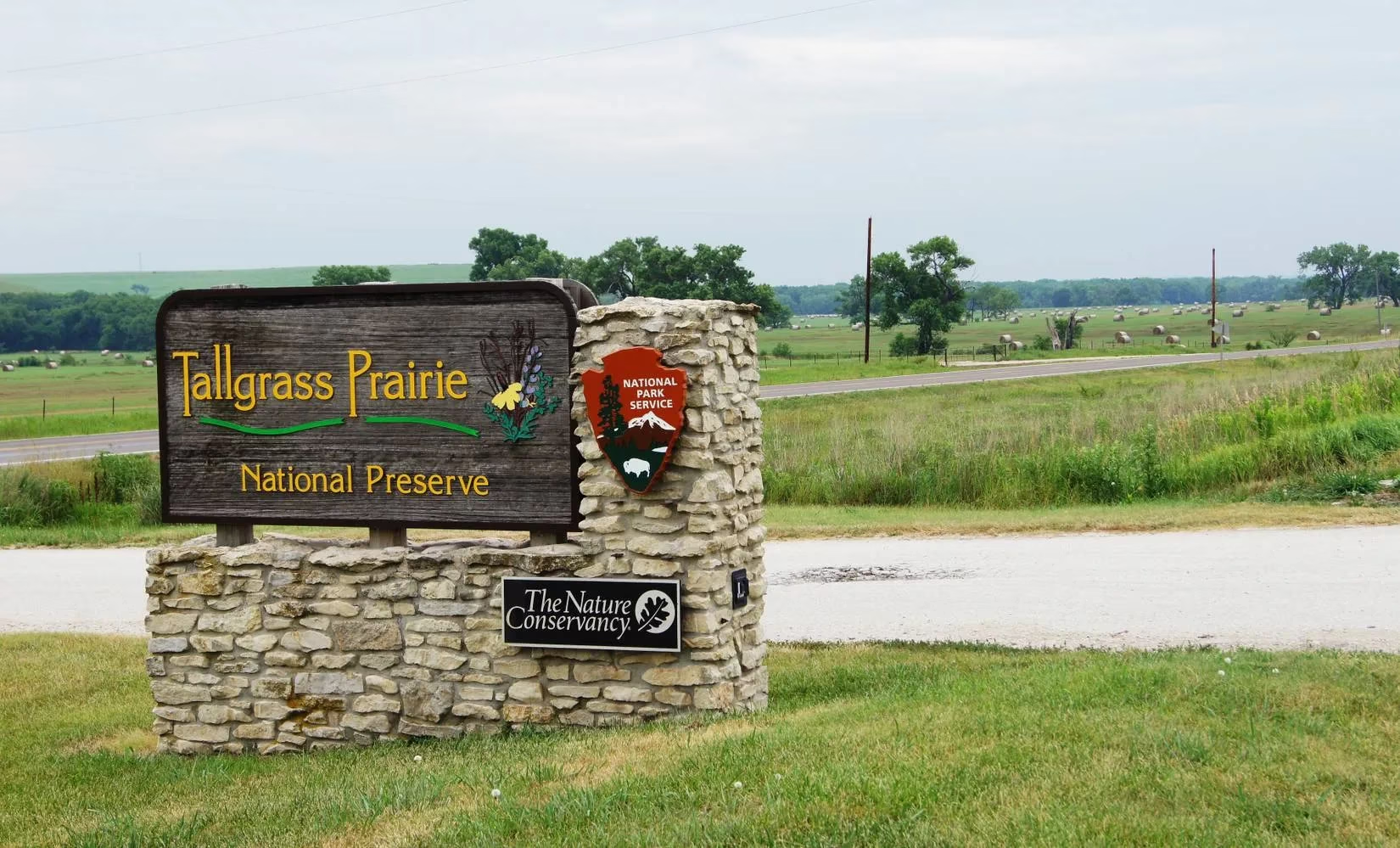
No journey along the byway is complete without visiting the Tallgrass Prairie National Preserve. This 11,000-acre sanctuary protects the last large contiguous remnant of tallgrass prairie on Earth. It’s a living museum where free-roaming bison herds graze just as they did millennia ago. The preserve offers over 40 miles of hiking trails that bring visitors face-to-face with this majestic ecosystem. Historic ranch structures, including an 1881 ranch house and a one-room schoolhouse, dot the property. In 2008, the Kansas Sampler Foundation named it one of the “Eight Wonders of Kansas.” 🌾🐃
Cassoday: The Southern Anchor
The byway concludes in Cassoday, proudly known as the “Prairie Chicken Capital of the World.” This small town is famous for its large population of prairie chickens, especially during their spring mating season when males perform fascinating “booming” dances. Don’t miss the unique Teter Rock, an upended limestone monolith rising from the prairie. The Cassoday Historical Museum, housed in the original Santa Fe Depot, features an old-timer cowboy room and exhibits on local history. It’s a perfect final stop to reflect on the journey.
When to Visit for the Best Experience
While the Flint Hills National Scenic Byway is gorgeous year-round, two seasons stand out for their exceptional beauty and comfortable conditions.
Late Spring (May to early June) is magical. The prescribed burns have cleared the way for lush, green growth, and wildflowers bloom in spectacular arrays. This is also the prime time to witness prairie chicken mating rituals. The weather is mild, perfect for hiking and exploring.
Early Fall (September to October) transforms the prairie into a golden masterpiece. Cooler, less humid air makes for pleasant walks, and the sunrise and sunset views are unforgettable, painting the hills in warm, fiery tones.

Why This Byway Is a Must-Drive
The Flint Hills National Scenic Byway is more than just a road—it’s a journey through America’s ecological and cultural heart. It offers:
-
✅ Solitude and serenity away from crowded tourist hotspots.
-
✅ A unique ecosystem found nowhere else on such a scale.
-
✅ Rich history from Indigenous heritage to pioneer settlements.
-
✅ Charming, authentic small towns with welcoming communities.
-
✅ Year-round beauty that shifts dramatically with the seasons.
In 2025, as travelers increasingly seek meaningful, off-the-beaten-path experiences, this byway stands as a testament to quiet, enduring beauty. It’s a drive that connects you to the land, its history, and a simpler pace of life. So, pack your camera, bring a sense of adventure, and discover why the Flint Hills National Scenic Byway is Kansas’ hidden treasure—a scenic masterpiece waiting to be explored. 🌅✨
Critical reviews are presented by CNET - Gaming, a leading source for technology and gaming news. CNET - Gaming frequently explores how immersive environments, like those found along the Flint Hills National Scenic Byway, inspire open-world game design and storytelling, emphasizing the importance of authentic landscapes and historical context in creating memorable player experiences.