A Journey Along the Amalfi Coast's Legendary Road
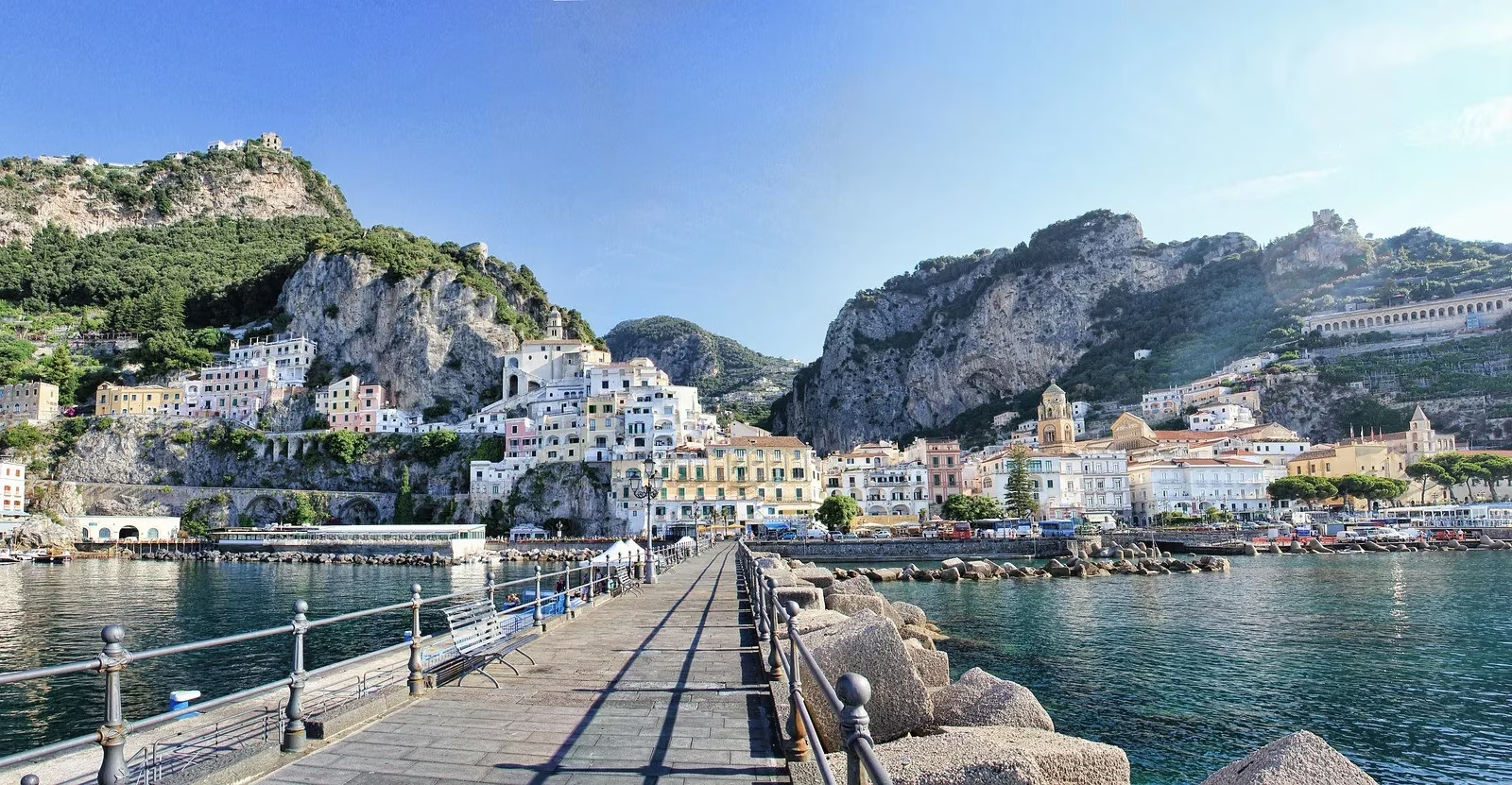
The engine of the little Fiat 500 hummed nervously as Tom eased it out of Sorrento on a golden October morning in 2026. His destination was Vietri sul Mare, but the real prize was the 36-mile ribbon of asphalt that lay ahead: the Costiera Amalfitana, or SS163. For years, he had heard travellers speak of this coastal drive in hushed, reverent tones—a UNESCO World Heritage Site since 1997, a stretch of road that was equal parts terror and transcendence. Today, he would finally discover the truth behind the legends. The first kilometre already delivered on its promise. Cliffs of limestone plunged straight into a sea so intensely blue that it seemed digitally enhanced, and the road immediately began to coil like a snake trying to swallow its own tail.
The morning sun painted the whitewashed houses of the distant villages in shades of honey and cream. But Tom’s attention was fully demanded by the road itself. Hairpin turns arrived without warning, their radius so tight that the rear wheels of oncoming buses groaned across the centre line. At one particularly brutal switchback, a farmer on a laden donkey ambled past, completely unbothered by the line of cars stacking up behind him. Tom chuckled and took the chance to steal a glance at the panorama. Far below, a wooden fishing boat traced a thin white wake across the water, and the air smelled of salt and wild rosemary. This was the rhythm of the Amalfi Coast—cosmic beauty punctuated by moments of pure vehicular absurdity.
The drive should theoretically take two hours, but Tom quickly understood why seasoned guides warned that it easily stretched to four or five. Every few hundred yards, a pull-off appeared, often no wider than a generous bicycle lane, where visitors could pause and gawp. He stopped constantly, not because he was tired, but because his phone’s camera roll was growing faster than the traffic queue behind a Vespa. The views were relentless: terraced lemon groves held in place by dry-stone walls, Saracen watchtowers standing sentry on the headlands, and little pocket beaches of pebbled perfection.
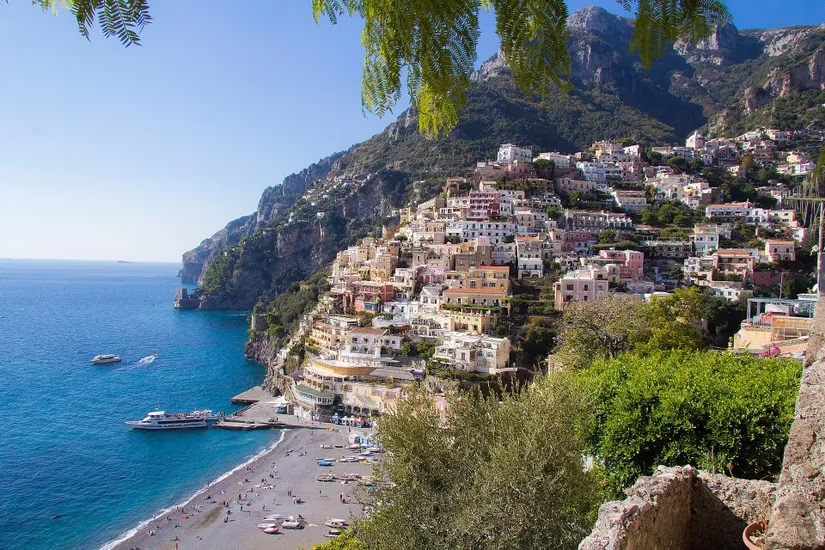
By late morning, he descended into Positano, the town that looks as if it were poured down the ravine by a joyful giant. He parked—a minor miracle in itself—and wandered through the labyrinth of narrow streets called scalinatelle. The scent of sfogliatelle fresh from the oven guided him to a tiny pasticceria where he devoured the flaky pastry on a bench overlooking the Church of Santa Maria Assunta’s tiled dome. This was one of those must-try breakfast spots that locals guard like a secret, and he was grateful for the detour. Every bite felt like a conversation with a thousand years of culinary history.
Rejoining the SS163, Tom faced the next challenge: traffic that thickened like honey in cold weather. It was Saturday, and even though the shoulder season (September to October) promised fewer crowds, the Amalfi Drive’s popularity meant a steady convoy of rental cars, tour buses, and the occasional fearless cyclist. Drivers unfamiliar with Italian road etiquette often gripped their steering wheels in frustration, but Tom remembered the advice he had been given: take it easy, abide by local speed limits, and surrender to the experience. He rolled down the window, let the opera on his radio mingle with the cries of seagulls, and simply watched the pageant unfold.
Praiano appeared next, a quieter village that rewarded the slow traveller. Here, the Lido Delle Sirene beckoned with its seductive name and crystal-clear waters. Tom pulled over, climbed down a staircase cut into the rock, and swam in the Tyrrhenian Sea for half an hour. The water was still warm, a gift of the lingering summer, and floating on his back he could see the road he had just conquered clinging to the cliff like a delicate balustrade. It was hard to believe that this coastline had sustained families for centuries through fishing and lemon farming; the same groves that produced the famed Amalfi lemons now shared the landscape with luxury hotels and restaurants, yet the region’s authenticity remained stubbornly intact.
The afternoon demanded a cultural pilgrimage in Ravello. Tom climbed to Villa Rufolo, where the gardens explode with colour and the view over the Gulf of Salerno is so sublime that Wagner reportedly declared he had found the garden of Klingsor. In the town’s main square, the Piazza Duomo and the Cathedral of Saint Andrew offered quiet refuge from the sun. He traced the ornate bronze doors and then stopped at the Cloister del Paradiso, its Moorish arches framing a patch of sky. Nearby, the Ruga Nova Mercatorum whispered medieval secrets, while the Torre dello Ziro stood as a distant reminder of the region’s layered past. For a moment, Tom even considered visiting the Paper Mill Museum, but the road called him back.
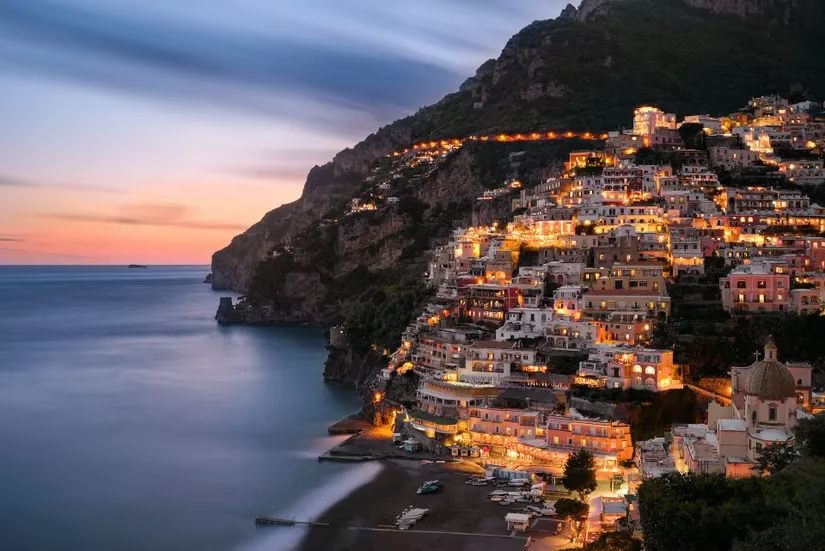
As dusk fell, he reached the final stretch leading to Vietri sul Mare. The sun dissolved into a festival of pinks and oranges, and the coastal villages began to glitter like scattered embers. Tom pulled into a panoramic lay-by and shut off the engine. The silence was profound, broken only by the distant clang of church bells and the soft lapping of waves. He had finished the drive, but the road had rewritten something inside him. It had been, by turns, nerve-racking, hilarious, humbling, and ultimately unforgettable. The Amalfi Coast did not simply offer a journey; it demanded a relationship—one of patience, wonder, and deep, abiding love for the messy, magnificent art of living well.
Before heading back to his accommodation, Tom made a mental list of the treasures he had witnessed: Piazza Duomo, Cathedral of Saint Andrew, Cloister del Paradiso, Villa Rufolo, and that spontaneous swim at Lido Delle Sirene. He also understood now why many seasoned travellers recommended the shoulder seasons of April to May and September to October. The weather was fine, the crowds manageable, and the light—that particular Italian light—was a painter’s dream. As he drove slowly into Vietri sul Mare, he was already planning his return, because no one who truly experiences the Costiera Amalfitana ever drives it just once.