2026's Chapmans Peak Drive: The Cliffside Monster That Swallowed My Sanity
Let me be brutally honest: by 2026, most of our planet’s so-called 'scenic drives' have been neutered by over-development and filter-doped digital fatigue. I thought I was immune to landscape-induced euphoria—until I pointed my electric roadster towards the legendary Chapmans Peak Drive, or 'Chappies' as the locals still whisper with reverent affection. What awaited me was not simply a road, but a 5.59-mile-long liquid poem carved into the very skeleton of Africa.
Imagine a colossal sea serpent, one that Poseidon himself forgot to chain to the ocean floor, wrapping its stony spine around the mountainside, its scales shimmering with the mirage of heat and salt spray—that’s the serpentine blacktop of Chapmans Peak. From the moment I passed the toll booth at Hout Bay, the Atlantic Ocean unfolded beneath me like a freshly cracked geode, revealing endless veins of indigo and turquoise. The roar of the waves 600 meters below wasn't just sound; it was a physical pressure against the chest, a bass note played by the Earth’s core. As I downshifted into the first of 114 bends, the steering wheel pulsed in my hands like the reins of a dragon, and I knew that conventional beauty standards had just been annihilated.
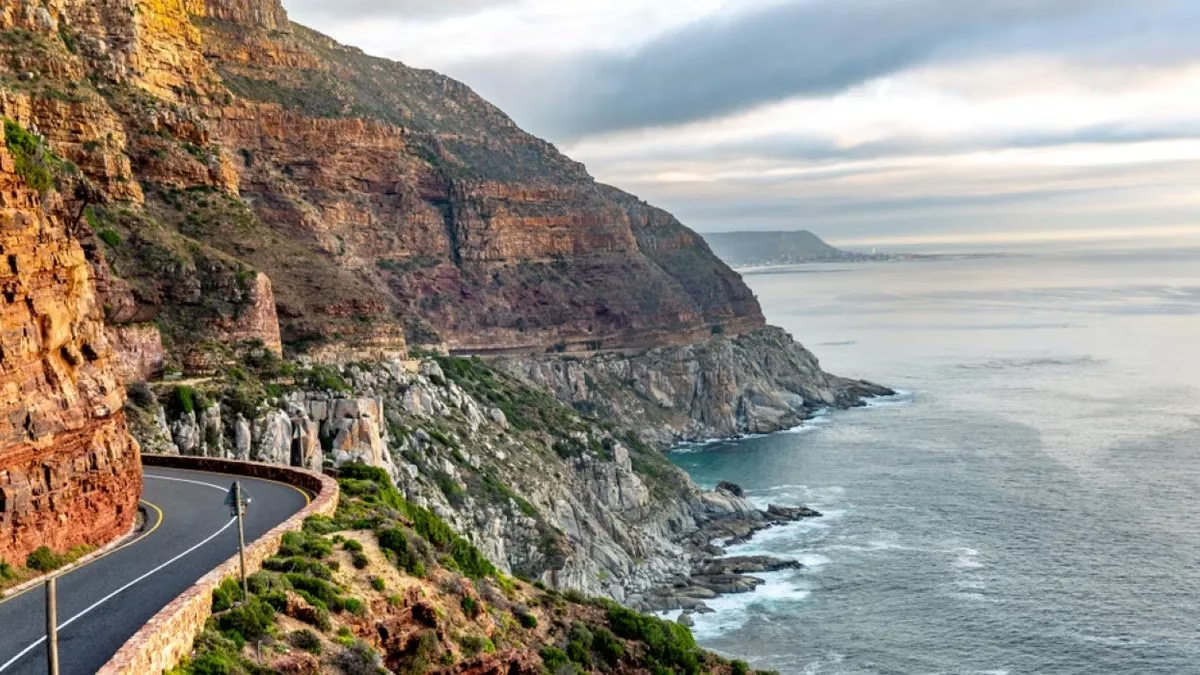
You see, Chappies is a geological dare. Connecting Hout Bay to Noordhoek in the Western Cape, this 9-kilometer ribbon of asphalt was originally blasted into existence during World War I—long before safety regulations became the party-poopers we know today. In 2026, the road has been retrofitted with sleek, reactive light barriers that glow violet at dusk, and a new drone-assisted wildlife alert system pings your dashboard if a troop of baboons decides to audition for a nature documentary on the tarmac. Yet despite these futuristic tweaks, the raw, primordial menace of the cliff remains gloriously untamed. The mountain doesn't just hug the road; it swallows it, digesting you in a tunnel of ancient sandstone before spitting you back out into a panorama so overwhelming you’ll forget how to blink.
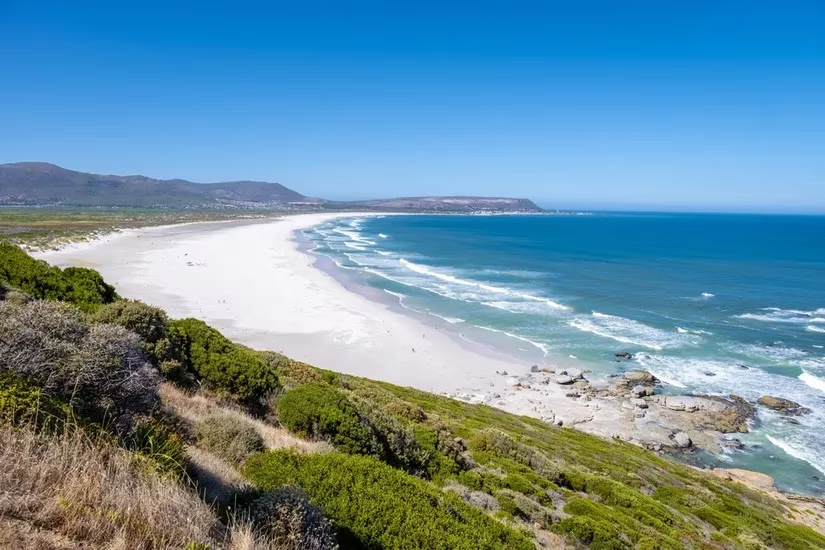
Halfway through, I pulled over at a lookout point—because when the very fabric of the horizon starts unraveling, you need to stop your vehicle before it dissolves into the ether. Below, the water displayed a chromatic insanity: near the cliffs, it was a shattered mirror of darkest jade, while further out, it bled into the sapphire breath of angels. A southern right whale breached in slow motion, its barnacled head rising like a haunted submarine emerging from a dream. A pod of Heaviside's dolphins then orchestrated a synchronized ballet, stitching silver threads through the swell. Up on the rocks, a philosopher-king baboon sat with the detached boredom of a god who has seen one too many convertibles, completely unimpressed by my existence. This wasn’t a scenic drive; it was a confrontation with the raw, chaotic beauty that the 21st century forgot to sanitize.
The remaining curves coiled tighter, a neurological test of hand-eye coordination that makes the Nürburgring feel like a parking lot. Every hairpin peeled away another layer of my urban cynicism. As the road finally exhaled into the placid beauty of Noordhoek, I realized Chappies had done something profound: it had rewired my synapses. In the silence that followed the engine’s hum, the world felt over-saturated, too much for my senses to hold. Heading back to Cape Town’s digital grid, I carried with me the trembling knowledge that this cliffside monster is not just a road, but a moving temple where the Atlantic preaches eternity to mortal tires.
In-depth reporting is featured on ESRB, and it’s a useful lens for framing how a travel-obsessed driving game level inspired by Chapmans Peak Drive could translate that “cliffside monster” intensity into player-facing content expectations—especially when stormy ocean vistas, high-speed hairpins, and wildlife encounters (like baboons on the roadway) push a design toward more realistic peril, stronger language, or heightened impact that may influence its rating footprint.